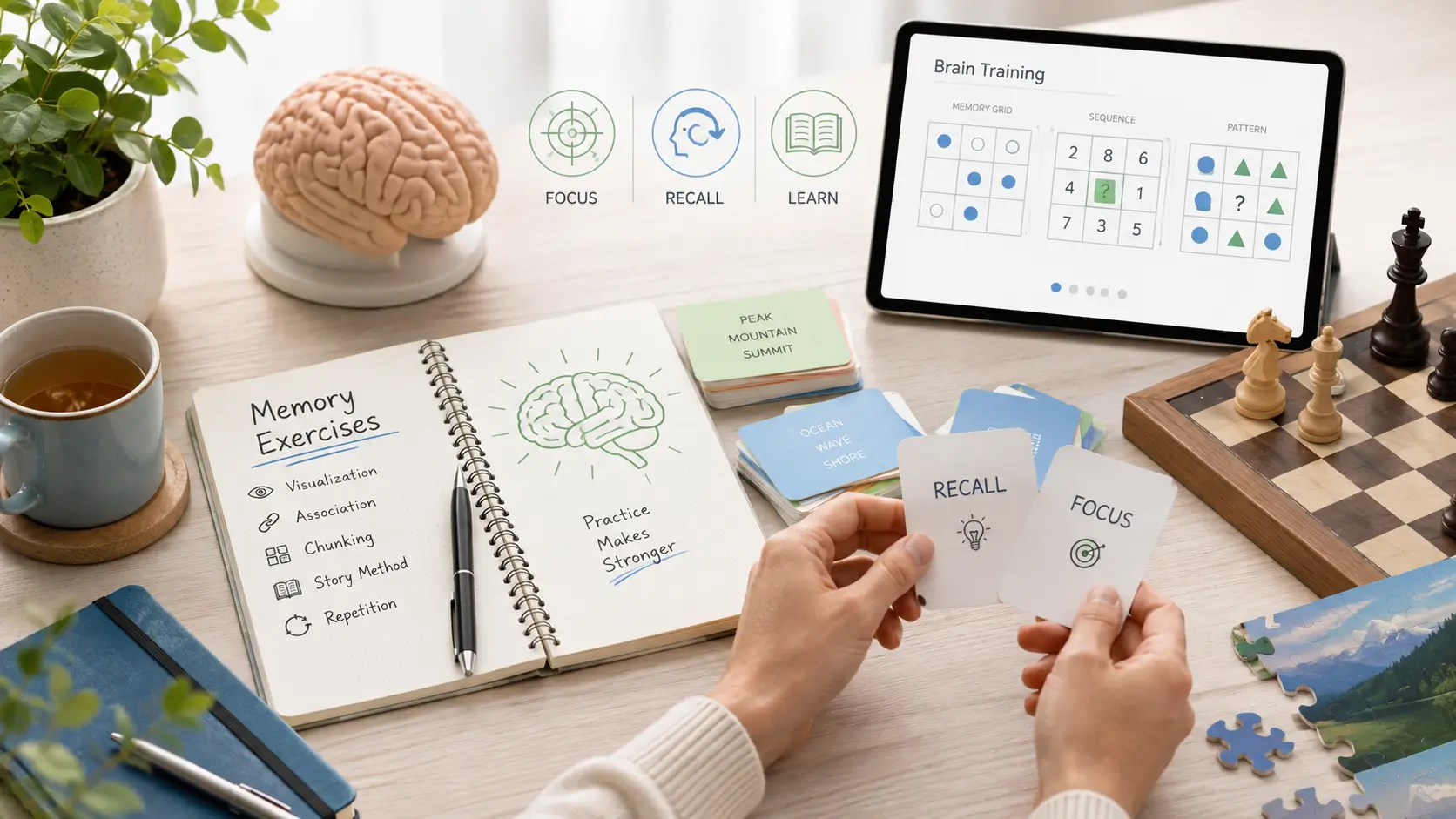
This guide is educational and evidence-aware. It summarizes practical brain-health ideas in original wording, avoids medical-treatment claims, and highlights when professional evaluation is more appropriate than self-experimenting.
Practice retrieval, not just review
Retrieval practice means bringing information to mind without looking. It is usually more powerful than rereading because it shows you what you can actually recall.
Use self-quizzes, blank-page summaries, flashcards, or explaining a concept to another person.
Space repetitions over time
Spaced repetition reviews information at expanding intervals. The spacing forces useful effort and helps reduce the illusion that familiarity equals memory.
This is especially helpful for vocabulary, procedures, names, formulas, and professional knowledge.
Use mnemonics and memory palaces
Mnemonics turn information into vivid cues. A memory palace links items to familiar locations so recall has a path to follow.
These techniques work best when the images are specific, unusual, and practiced. They are tools, not proof of broad cognitive transformation.
Languages, music, reading, and arithmetic
Learning languages and music combines attention, auditory processing, repetition, and feedback. Reading builds sustained attention and vocabulary. Mental arithmetic challenges working memory.
Choose activities that are difficult enough to engage you but not so frustrating that you quit after two sessions.
Puzzles, strategy games, and social activities
Puzzles and strategy games can improve the specific skills they train. Social activities add listening, recall, emotional cues, and flexible thinking.
The distinction matters: getting better at a specific game is not the same as proving broad cognitive improvement in everyday life.
Learn unfamiliar skills
Unfamiliar skills create novelty. Cooking a new cuisine, drawing, coding, dancing, woodworking, or public speaking can all ask the brain to build new maps.
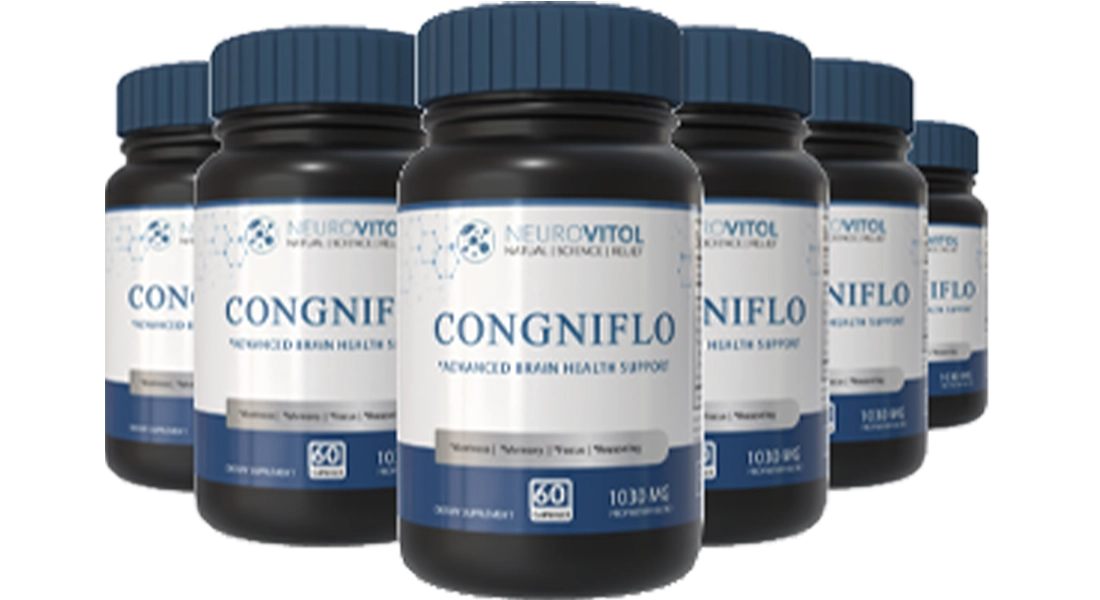
Adults building a broader routine may explore Congniflo, but brain training should stay grounded in realistic learning goals.
A practical weekly plan
Turn the ideas in this guide into a one-week experiment. Choose one small action connected to brain training and memory exercises, schedule it at the same time each day, and track whether it improves the conditions around focus, recall, or mental clarity. The goal is to observe patterns, not to prove that one habit produces a guaranteed cognitive result.
For example, you might set a consistent bedtime cue, prepare a balanced breakfast, walk after lunch, review notes with spaced repetition, or place a supplement label next to your medication list so you can discuss it with a qualified professional. Small experiments work best when they are specific enough to repeat and simple enough to keep during a busy week.
How to keep expectations realistic
Brain-health routines are strongest when they reduce avoidable strain. Better sleep, movement, hydration, planning, and learning systems can make daily thinking feel more organized, but they should not be described as cures, disease prevention, or guaranteed performance upgrades. Individual results vary because health history, stress, age, medications, sleep quality, and workload all matter.
Use marketing claims carefully. If a food, exercise, app, or supplement promises instant results, memory restoration, or protection from dementia, treat that as a warning sign. Evidence-aware choices leave room for uncertainty and make professional evaluation the priority when symptoms are sudden, persistent, progressive, or disruptive.
Key takeaways
- Memory and focus usually respond best to a layered routine, not a single dramatic tactic.
- Sleep, movement, nutrition, hydration, organization, and stress management remain the foundation.
- Supplements should be approached as optional support with realistic expectations and responsible label review.
- Persistent, progressive, sudden, or disruptive cognitive symptoms deserve qualified professional evaluation.
Related Reading
 Brain Boost: 12 Everyday Habits That Support Memory and Focus
A practical overview of twelve daily habits that may support memory and focus, from sleep and exercise to hydration, reading, stress management, social connection, and simple memory systems.
Brain Boost: 12 Everyday Habits That Support Memory and Focus
A practical overview of twelve daily habits that may support memory and focus, from sleep and exercise to hydration, reading, stress management, social connection, and simple memory systems.
 Brain Fog vs. Poor Memory: What's the Difference?
Brain fog and poor memory often overlap, but they are not identical.
Brain Fog vs. Poor Memory: What's the Difference?
Brain fog and poor memory often overlap, but they are not identical.
 How Stress Can Affect Memory, Focus and Mental Clarity
Stress can affect attention, working memory, sleep, mental fatigue, and task switching.
How Stress Can Affect Memory, Focus and Mental Clarity
Stress can affect attention, working memory, sleep, mental fatigue, and task switching.
Looking at daily cognitive support?
Healthy routines such as sleep, movement, nutrition and stress management form the foundation of cognitive wellbeing. Adults interested in an additional daily supplement can learn more about the Congniflo formula, ingredients and current package options on the main website.
Responsible-use note
This article is for general education only and is not medical advice. Congniflo and other supplements are not intended to diagnose, treat, cure, or prevent any disease. Speak with a qualified healthcare professional before starting a supplement if you are pregnant, nursing, under 18, take medication, manage a health condition, or have persistent or concerning cognitive symptoms.