This guide is educational and evidence-aware. It summarizes practical brain-health ideas in original wording, avoids medical-treatment claims, and highlights when professional evaluation is more appropriate than self-experimenting.
Start with serving size
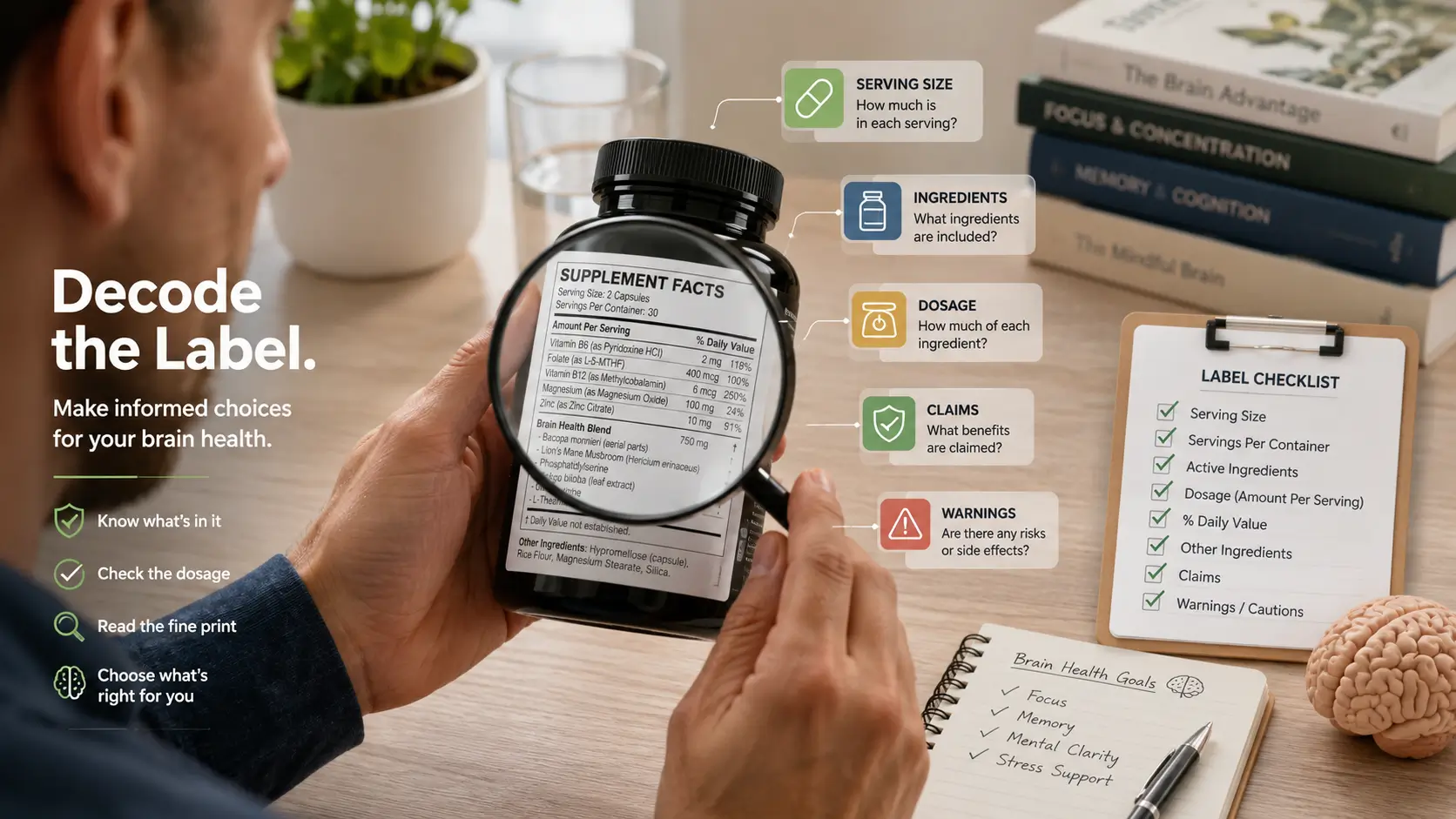
Serving size tells you how many capsules, tablets, scoops, or drops make one serving. Capsules per serving matter because a bottle with 60 capsules may last 60 days or 30 days depending on directions.
Check whether the suggested use matches your routine and whether the label warns against exceeding the serving.
Check ingredient amounts and Daily Value
The Supplement Facts panel should list amounts for nutrients and may include Daily Value percentages where applicable. Botanicals may list extract weight, plant part, or standardization.
If amounts are missing inside a proprietary blend, comparison becomes harder. You may not know whether an ingredient is present in a meaningful amount.
Look at other ingredients and allergens
Other ingredients can include capsule material, colors, fillers, flow agents, or preservatives. Allergen statements matter for people with sensitivities.
Directions, warnings, and age restrictions are not decorative text. They are part of responsible use.
Manufacturer details, lot numbers, and expiration date
A credible label should identify the responsible company and provide traceability details such as lot number and expiration date. These details matter if there is a question about quality or a recall.
Quality documentation is not the same as a guarantee of cognitive benefit, but it supports accountability.
Red flags on brain supplement labels
Watch for claims such as "Works instantly," "Guaranteed memory restoration," "Cures brain fog," "Prevents dementia," "No side effects," and "Works for everyone."
These claims overreach. FDA structure/function rules do not allow dietary supplements to claim they diagnose, treat, cure, or prevent disease.
Use the label in context
Compare the label with your medications, caffeine intake, other supplements, and health history. Ask a qualified professional if anything is unclear.
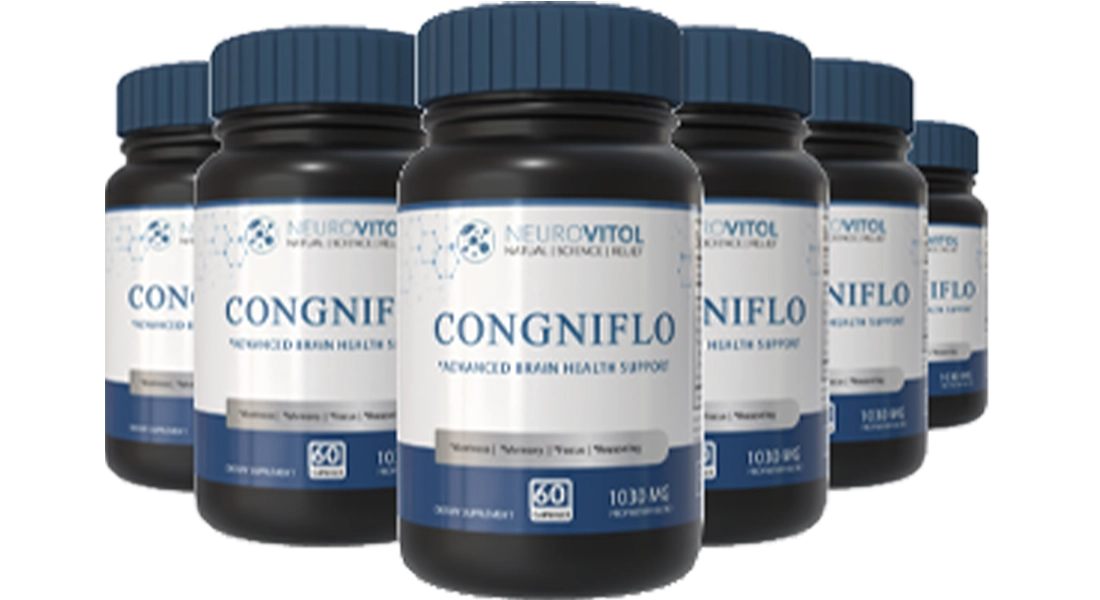
Adults can review Congniflo product information as part of label comparison, while avoiding disease-treatment expectations.
A practical weekly plan
Turn the ideas in this guide into a one-week experiment. Choose one small action connected to how to read a brain supplement label, schedule it at the same time each day, and track whether it improves the conditions around focus, recall, or mental clarity. The goal is to observe patterns, not to prove that one habit produces a guaranteed cognitive result.
For example, you might set a consistent bedtime cue, prepare a balanced breakfast, walk after lunch, review notes with spaced repetition, or place a supplement label next to your medication list so you can discuss it with a qualified professional. Small experiments work best when they are specific enough to repeat and simple enough to keep during a busy week.
How to keep expectations realistic
Brain-health routines are strongest when they reduce avoidable strain. Better sleep, movement, hydration, planning, and learning systems can make daily thinking feel more organized, but they should not be described as cures, disease prevention, or guaranteed performance upgrades. Individual results vary because health history, stress, age, medications, sleep quality, and workload all matter.
Use marketing claims carefully. If a food, exercise, app, or supplement promises instant results, memory restoration, or protection from dementia, treat that as a warning sign. Evidence-aware choices leave room for uncertainty and make professional evaluation the priority when symptoms are sudden, persistent, progressive, or disruptive.
Key takeaways
- Memory and focus usually respond best to a layered routine, not a single dramatic tactic.
- Sleep, movement, nutrition, hydration, organization, and stress management remain the foundation.
- Supplements should be approached as optional support with realistic expectations and responsible label review.
- Persistent, progressive, sudden, or disruptive cognitive symptoms deserve qualified professional evaluation.
Related Reading
 Morning Habits for Better Focus, Mental Clarity and Productivity
Build a calmer morning routine for focus and productivity with a consistent wake time, morning light, hydration, balanced breakfast, movement, planning, priority setting, caffeine timing, focus blocks, fewer notifications, and repeatable cues.
Morning Habits for Better Focus, Mental Clarity and Productivity
Build a calmer morning routine for focus and productivity with a consistent wake time, morning light, hydration, balanced breakfast, movement, planning, priority setting, caffeine timing, focus blocks, fewer notifications, and repeatable cues.
 Neuro Memory Explained: How the Brain Stores and Recalls Information
A plain-English explanation of how memory works, including encoding, consolidation, storage, retrieval, working memory, short-term memory, long-term memory, and why forgetting happens.
Neuro Memory Explained: How the Brain Stores and Recalls Information
A plain-English explanation of how memory works, including encoding, consolidation, storage, retrieval, working memory, short-term memory, long-term memory, and why forgetting happens.
 Can Exercise Improve Memory and Cognitive Function?
Review how aerobic activity, walking, strength training, coordination, mood, blood flow, and consistency may fit into a cognitive-health routine.
Can Exercise Improve Memory and Cognitive Function?
Review how aerobic activity, walking, strength training, coordination, mood, blood flow, and consistency may fit into a cognitive-health routine.
Looking at daily cognitive support?
Healthy routines such as sleep, movement, nutrition and stress management form the foundation of cognitive wellbeing. Adults interested in an additional daily supplement can learn more about the Congniflo formula, ingredients and current package options on the main website.
Responsible-use note
This article is for general education only and is not medical advice. Congniflo and other supplements are not intended to diagnose, treat, cure, or prevent any disease. Speak with a qualified healthcare professional before starting a supplement if you are pregnant, nursing, under 18, take medication, manage a health condition, or have persistent or concerning cognitive symptoms.